Trump’s China Visit, Xi Jinping’s Messaging, and Putin’s Beijing Trip
The video begins by contrasting China’s relatively quiet coverage of Trump’s visit with the much louder publicity surrounding Putin’s later arrival in Beijing. The speaker argues that this difference in media treatment is not accidental. In this interpretation, Trump’s visit created an awkward domestic problem for the Chinese leadership, while Putin’s visit provided a convenient stage for restoring political symbolism.
Trump’s China Visit, Xi Jinping’s Messaging, and Putin’s Beijing Trip
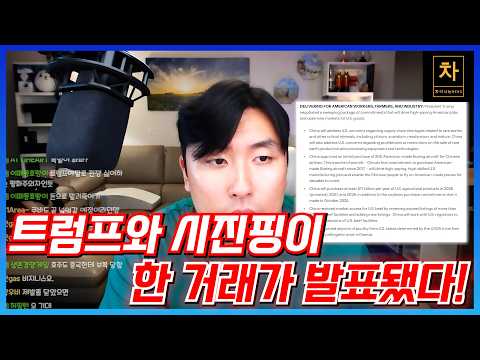
Original YouTube source thumbnail
Quick Summary
Main Summary
The video begins by contrasting China’s relatively quiet coverage of Trump’s visit with the much louder publicity surrounding Putin’s later arrival in Beijing. The speaker argues that this difference in media treatment is not accidental. In this interpretation, Trump’s visit created an awkward domestic problem for the Chinese leadership, while Putin’s visit provided a convenient stage for restoring political symbolism.
According to the video, Trump’s approach was consistent with an “America First” framework. The speaker describes Trump not as a leader who came to flatter China, but as a transactional negotiator who gave Xi Jinping public respect in exchange for practical economic gains. The video highlights reported Chinese commitments to purchase Boeing aircraft, American agricultural products, beef, and other goods as examples of what Trump allegedly obtained.
The source then turns to China’s domestic presentation of the meeting. It argues that Chinese state media did not clearly emphasize the economic concessions made to the United States. Instead, official language focused on abstract ideas such as constructive strategic stability. In the speaker’s view, this protected Xi Jinping’s image at home while keeping Chinese citizens from seeing the full cost of the negotiation.
The video also discusses Taiwan. It claims that Xi Jinping raised Taiwan as a red-line issue, but Trump did not give a new promise or change the existing U.S. position. The speaker emphasizes that listening to Xi Jinping’s demand is not the same as accepting it.
Finally, the video interprets Putin’s Beijing visit as a political performance. After Trump’s visit, Xi Jinping needed to reassure domestic hardliners and anti-U.S. audiences that China still stood at the center of an anti-hegemony bloc. In this framing, Putin’s visit served as a symbolic counterweight to Trump’s visit.
KGATE30 INSIGHT
From a KGATE30 perspective, the most important point is not whether every claim in the video is independently verified. The value of this source lies in how it frames great-power diplomacy as a combination of economic bargaining, domestic propaganda, face-saving rituals, and geopolitical theater.
The video reads Trump’s visit not as weakness, but as transactional statecraft. It reads China’s official messaging not as neutral diplomacy, but as domestic image management. It reads Putin’s visit not merely as a scheduled diplomatic event, but as a symbolic repair operation after Xi Jinping’s perceived loss of leverage.
For international readers, this is useful because Korean political YouTube commentary often blends geopolitical analysis, ideological anxiety, domestic anti-communist sentiment, and media criticism into one narrative. KGATE30 does not present the video’s interpretation as final truth. Instead, it organizes the argument so foreign readers can understand what the source is claiming and why that framing matters.
Cultural Context
Context Note 1
The video reflects a strong anti-communist and pro-U.S. worldview. The speaker repeatedly frames the United States as the main global force restraining authoritarian states. This is important because the analysis is not presented from a neutral diplomatic perspective, but from a worldview that treats U.S. power as essential to the survival of liberal democracy.
Context Note 2
The video also relies heavily on the concept of “face.” In East Asian political language, public dignity, symbolic hierarchy, and domestic image can matter as much as the written text of a diplomatic agreement. The speaker argues that Xi Jinping may have accepted economic concessions because the public staging of Trump’s visit helped protect his image inside China.
Context Note 3
Another important theme is information control. The video claims that Chinese citizens were shown a carefully managed version of the summit, while specific economic concessions were downplayed or hidden. Whether or not every detail is externally verified, this reflects a broader concern in Korean commentary about censorship, propaganda, and the difference between domestic and foreign narratives.
Knowledge Bridge: Timeline
Source
Trump’s China visit is presented as a carefully staged diplomatic event.
Source
The video claims Trump publicly praised or respected Xi Jinping’s status.
Source
Behind the public performance, the source says Trump secured major U.S.-oriented economic gains.
Source
Chinese official messaging allegedly avoided detailed discussion of those concessions.
Source
Taiwan was reportedly raised by Xi Jinping, but the video says Trump did not change the U.S. position.
Source
Putin’s later visit to Beijing is interpreted as a symbolic response.
Source
The video frames Putin’s visit as Xi Jinping’s attempt to restore anti-U.S. leadership imagery.
FAQ
Does the video claim Trump lost to Xi Jinping?
No. The video argues the opposite. It claims Trump appeared polite and respectful in public, but gained practical economic advantages behind the scenes.
What does the video say China gained?
The video suggests China mainly gained face-saving symbolism and a public image of stable relations with the United States.
What role does Taiwan play in the analysis?
Taiwan appears as a pressure point. The source says Xi Jinping raised the issue, but Trump did not make a new concession or change the existing U.S. position.
Why is Putin’s visit important in this interpretation?
The video argues that Putin’s visit helped Xi Jinping rebuild the image of leading an anti-U.S. or anti-hegemony bloc after the politically awkward optics of Trump’s visit.
Is this article verifying the video’s claims?
No. This article summarizes and contextualizes the video’s argument. Specific numbers, diplomatic details, and policy claims require separate external verification.
Key Terms
America First
A Trump-era policy framework focused on prioritizing U.S. economic and strategic interests.
Face-saving
A political and cultural practice of preserving public dignity and authority.
State media
Media organizations aligned with or controlled by a government.
Anti-hegemony bloc
A political framing often used to describe countries positioning themselves against U.S.-led global influence.
Taiwan issue
A major geopolitical dispute involving China, Taiwan, and the United States.